
The HousingAlerts system relies on repeat residential property transactions, because for Technical Analysis (TA) to work you must have absolute accuracy in the underlying database — TA tracks subtle changes and, in a sense, magnifies them.
Most local cycles hit commercial and residential around the same time, though commercial may have different time lags. There aren't enough repeat transactions in commercial markets to build a statistically valid sample for TA — so we use residential as the next best thing (and a very good one). It matters a lot what kind of "commercial" you mean: a 5- or 10-unit apartment project correlates much more directly with residential than a 100k-sq-ft downtown office tower. Retail is tightly correlated to the health of the local residential market ("retail follows rooftops").
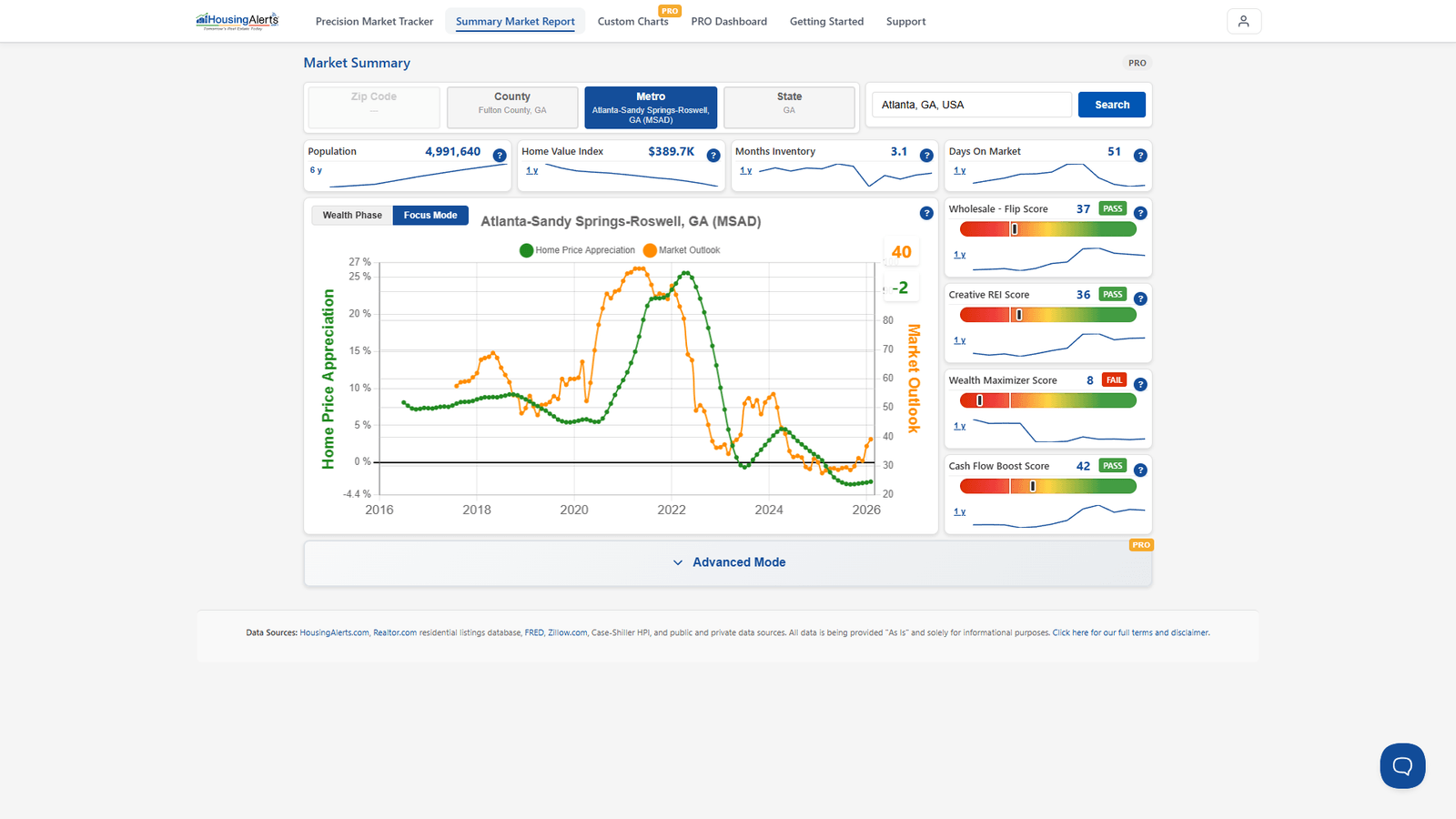
Generally, "dead" housing markets are also weak commercial markets; strong or emerging residential markets signal much stronger upside for commercial. So if the commercial market you're evaluating sits in a "sick" residential market (or weak long-term trends), apply very different criteria — discount future cash flows at a higher rate, be conservative on appreciation, or avoid it entirely. I'd use the same market-selection criteria for commercial as for residential — and I'm not aware of any system better at predicting commercial real estate than HousingAlerts.
On the new platform, screen any market's residential health with the Market Outlook Score (Map/Table) and the Wealth Phase (Market Summary Report), then apply it to your commercial decision.