
Small rural areas usually don't have enough real estate transactions each quarter to create a statistically valid sample size. As a rule, they follow the trends of the nearest larger markets.
HousingAlerts is a top-level market-analysis tool — it answers the most important question of "when & where" you should invest. Once you know the state of a market and where it is in its cycle, only then can you decide:
- Whether you should even be in that market, and
- Which tactics and strategies to use there (wholesaling vs. buy-and-hold vs. lease option, etc.).
For Technical Analysis to work, we rely on a dead-accurate, repeat-home-sale database — which requires many transactions in each time period. Small towns simply don't have enough data points to draw an accurate picture on their own.
General rule: if a place isn't large enough to be a U.S. Census Bureau MSA, look at the nearby larger market it tracks with. Once you've read that parent market's cycle, use the platform's micro-market drill-down to go deeper.
How to do this in the new platform
- Use the market-level selector to move from Metro → Counties → ZIP Codes. Read the overall cycle at the Metro level first (that's where the Wealth Phase and Market Outlook are most reliable), then drill down.
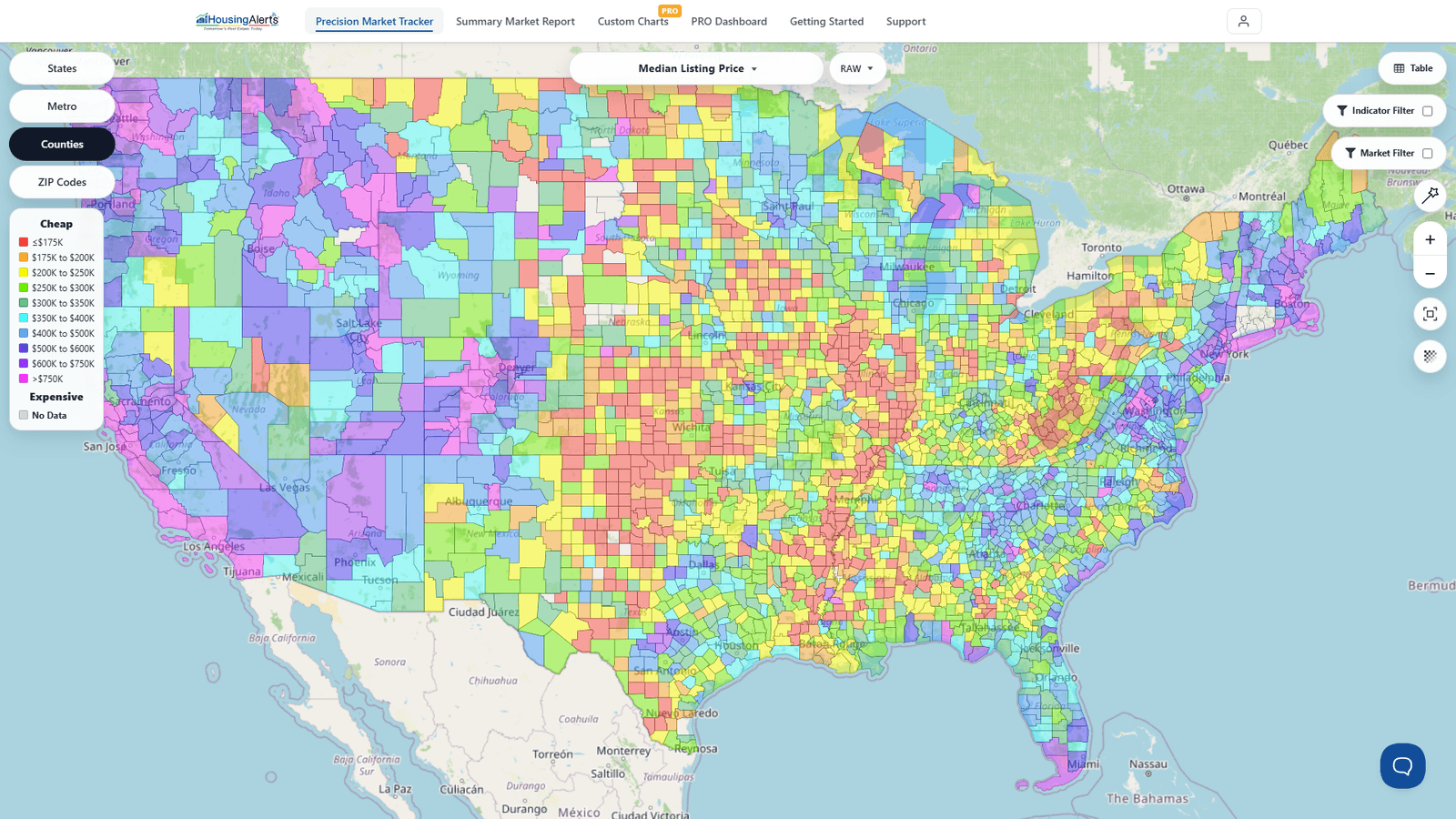
- Add a Market Filter for the state or metro you care about, switch the level to ZIP Codes, and the Map and Table will focus on just those micro-markets — ranked best-to-worst on the indicator you choose.
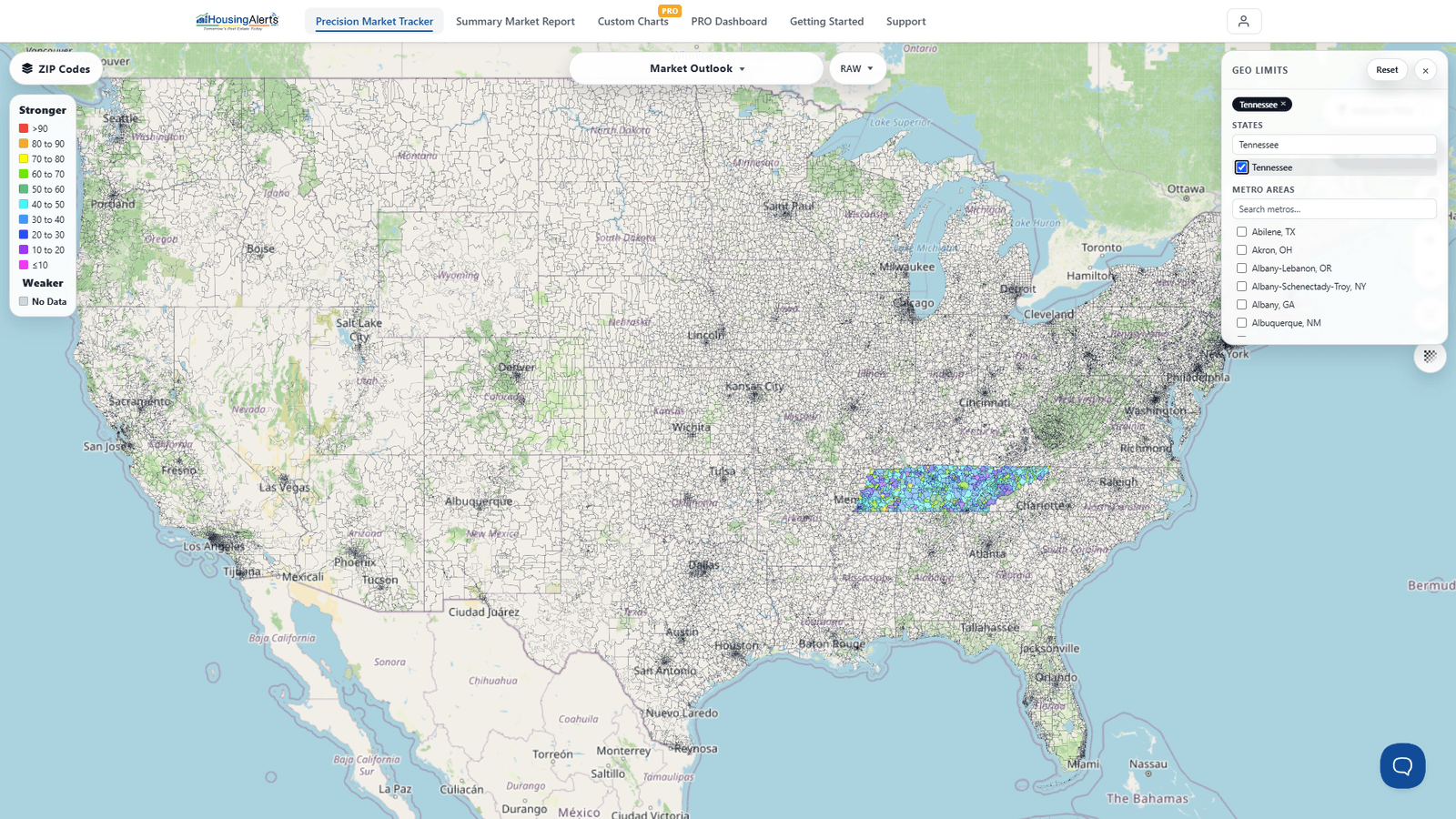
A few micro-markets will buck their parent market's trend to some degree, but that's the exception, not the rule. What happens at the Metro level will significantly shape a small area's long-term performance, so always anchor on the larger market first.