
We always keep track of any markets we're in on a monthly basis. After you've followed a buying signal, you want to make sure you recognize any developing weaknesses early. We recommend you dig a little deeper into the in-depth market research so you're familiar with the tools we provide.
At the same time — as a National member — you will probably want to continue to research other markets and keep growing in your knowledge and recognition of developing opportunities.
As far as investing strategy, you can do anything you like to acquire properties. You should do fine if you follow the "FAR-GAP-HAM" strategy, and you could do even better if you can buy at a discount. But many investors get so hung up on discounted buying strategies that they never make any money because they simply don't buy enough fast enough when a market is really set for appreciation.
Here is the reference for FAR-GAP-HAM: www.housingalerts.com/investing-strategies/proven-real-estate/103 (but you can also Google it)
Where you see this today
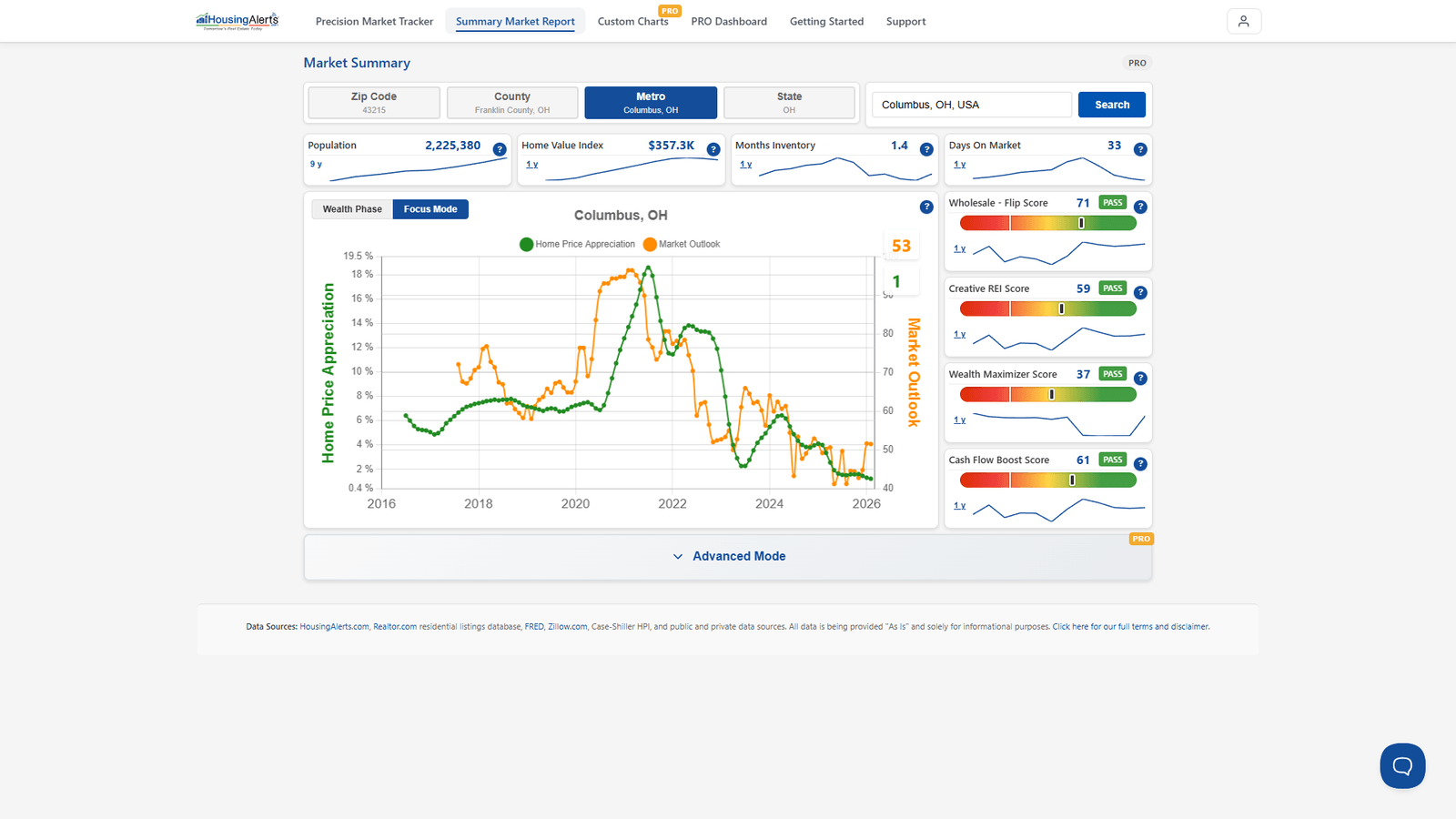
Once you've acted on a buying signal, the Market Summary Report becomes your monitoring dashboard for that market:
- Pull the market's report each quarter and watch the Market Outlook Score and Wealth Phase for any early sign of the trend rolling over — that's how you "recognize developing weaknesses early." The market you're in updates every quarter as new data lands.
- Keep researching other opportunities on the Map and in The Table — rank every market in the country by Market Outlook or by the strategy that fits your buy box, and drill into the strongest with a report.
- The strategy scores in the report line up with the idea behind FAR-GAP-HAM: get into markets that are set to appreciate, and don't get so hung up on the perfect discount that you never buy enough, fast enough.