
If there were fewer than a few dozen resales of single-family homes (excluding all new-home sales) in any of the three prior years, that explains why there's no data for a given tract or ZIP — it shows as No Data (grey) on the Map.
How the micro-market data works
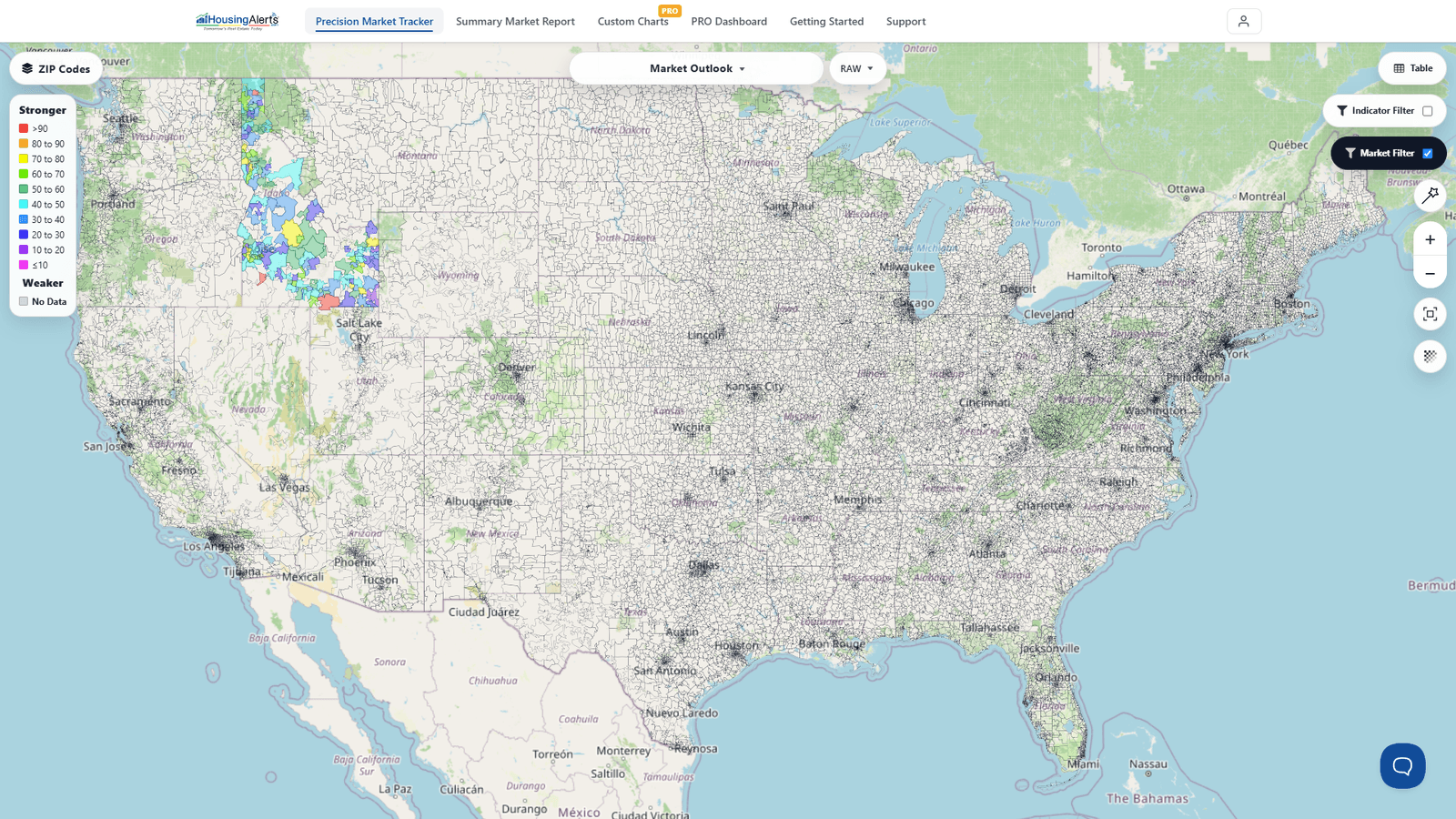
To get the dead-accurate data that Technical Analysis needs, we only use REPEAT home sales. We need at least a few dozen repeat sales in each tract, in each consecutive year, before we can do anything with the data. By tracking resales of the same specific properties over time — combined with a statistically valid sample of other repeat resales in that geography — we can compute what the market is doing on a more granular basis.
Because of these small-sample limitations, micro-market data does not have the same accuracy as Metro-level data. That's why we don't (and can't) run a full "TA Analysis" — Wealth Phases, T.A.P.S. sliders, etc. — on any geography smaller than the City/Metro level. Micro-markets are also not a "market" unto themselves; they're small pieces of the Metro and generally move in line with it. Use micro-market data primarily to compare relative differences between ZIP codes inside each Metro.
Metro-level data is also faster to respond to major changes: if a market dives or spikes, the Metro level picks it up well before the micro level.
Bottom line: we need a valid sample size — ideally at least a few dozen repeat home sales every year for at least three years — before the data can produce acceptable results. The more years and the more transactions per year in a tract, the more reliable the results.